0%
Project FOURIER  ·  ARC Institute of Knowware

Memory at the Speed of Light.

Kinetic Random Access Memory stores data as continuous light circulating in fiber — not as charge held in silicon. A new physical substrate for AI inference.

Kinetic — data in motion / Glass & light — no transistors / The only RAM that runs at c
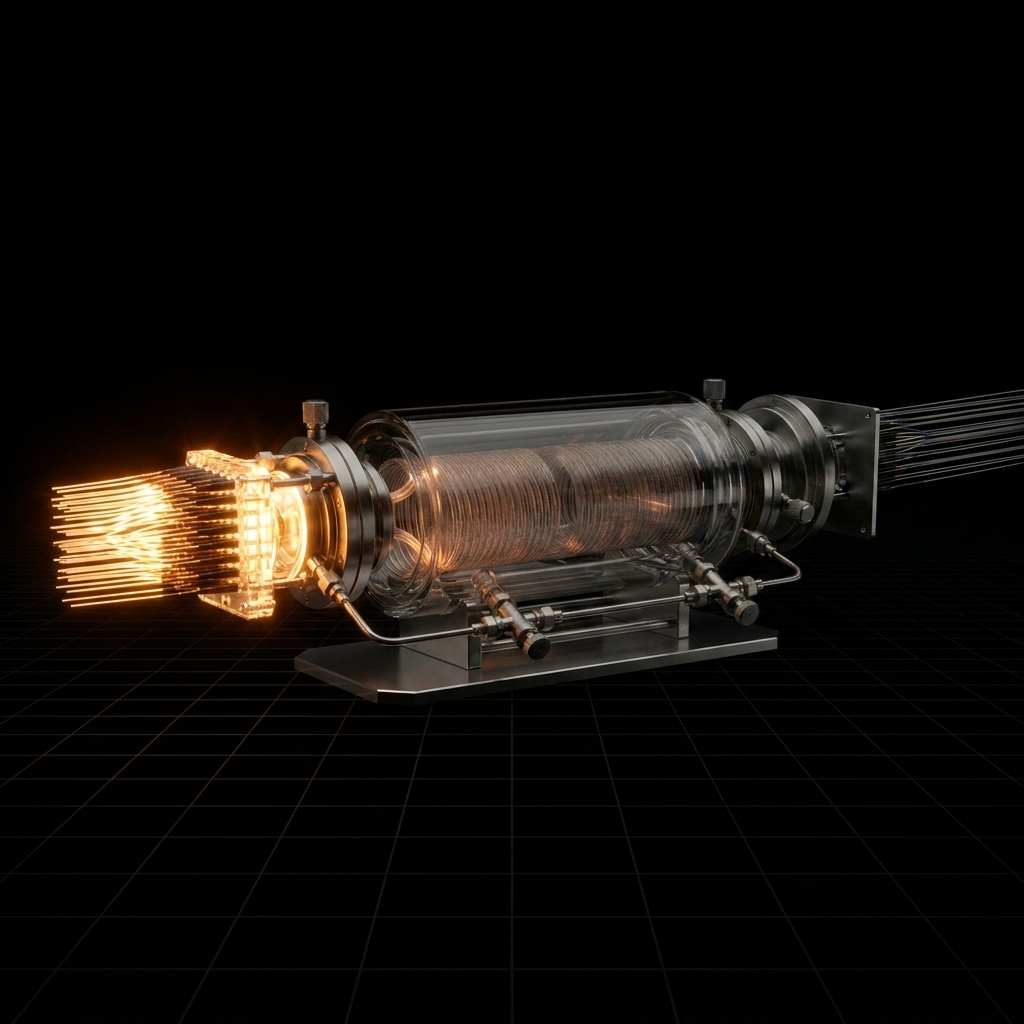
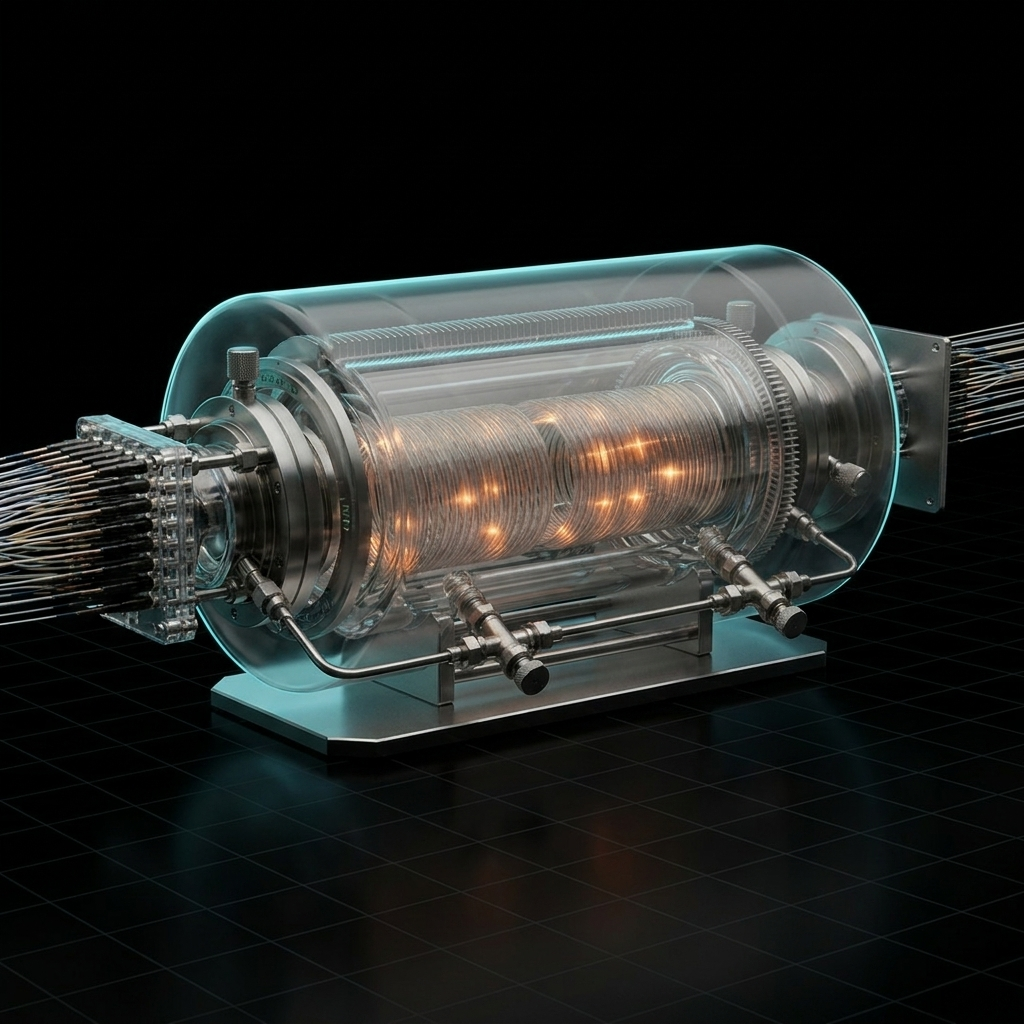
The Vessel  ·  Kinetic Memory Substrate
100-channel photonic dwdm
10 km single-mode fiber
200,000 km/s — light in glass

Scroll to explore
Our thesis

ARC Institute of Knowware is building a memory substrate that does not store data — it keeps it in motion. Modern AI has hit a wall that is not a compute problem: inference is memory-bound, and silicon memory is bound by charge, refresh, and the fab. K‑RAM steps outside that constraint entirely. By holding information as light circulating through a coil of single-mode fiber, we relocate the memory wall instead of optimizing within it — built on settled physics, commodity glass, and a sovereign supply chain.

The Kinetic Path

How information lives inside K‑RAM.

Data enters as light and stays as light — circulating, compressed, and regenerated without ever returning to the electronic domain. Six stages, one continuous loop.

Optical ingest Kinetic storage Constitutional compression Ternary reconstruction Thermal coherence Datacenter integration
01 / 06 Optical Ingest
01
Enter · encode

Optical Ingest

Information arrives as light. Model weights are written onto the substrate across many wavelengths at once through dense wavelength-division multiplexing — hundreds of independent channels sharing a single strand of glass. From the instant data enters, it never converts back to an electronic signal.

02
Circulate · hold

Kinetic Storage

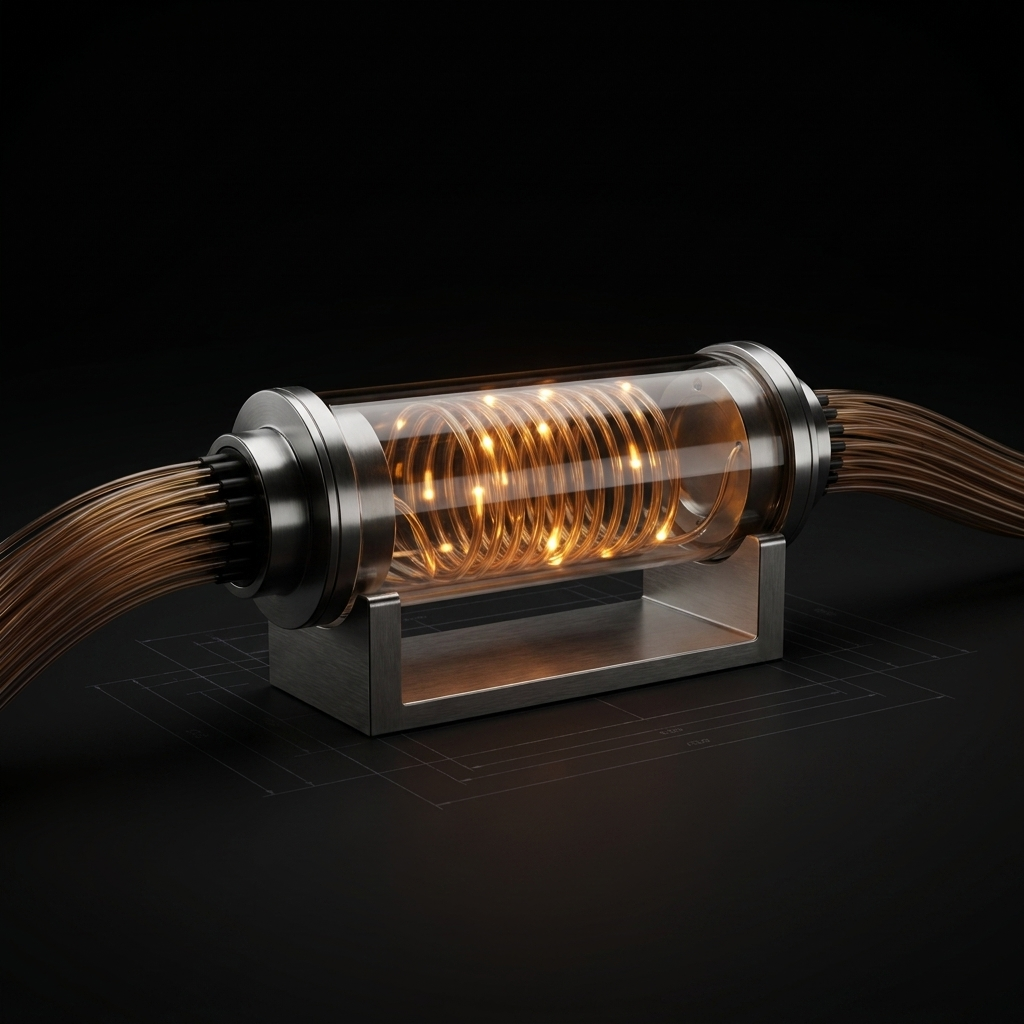
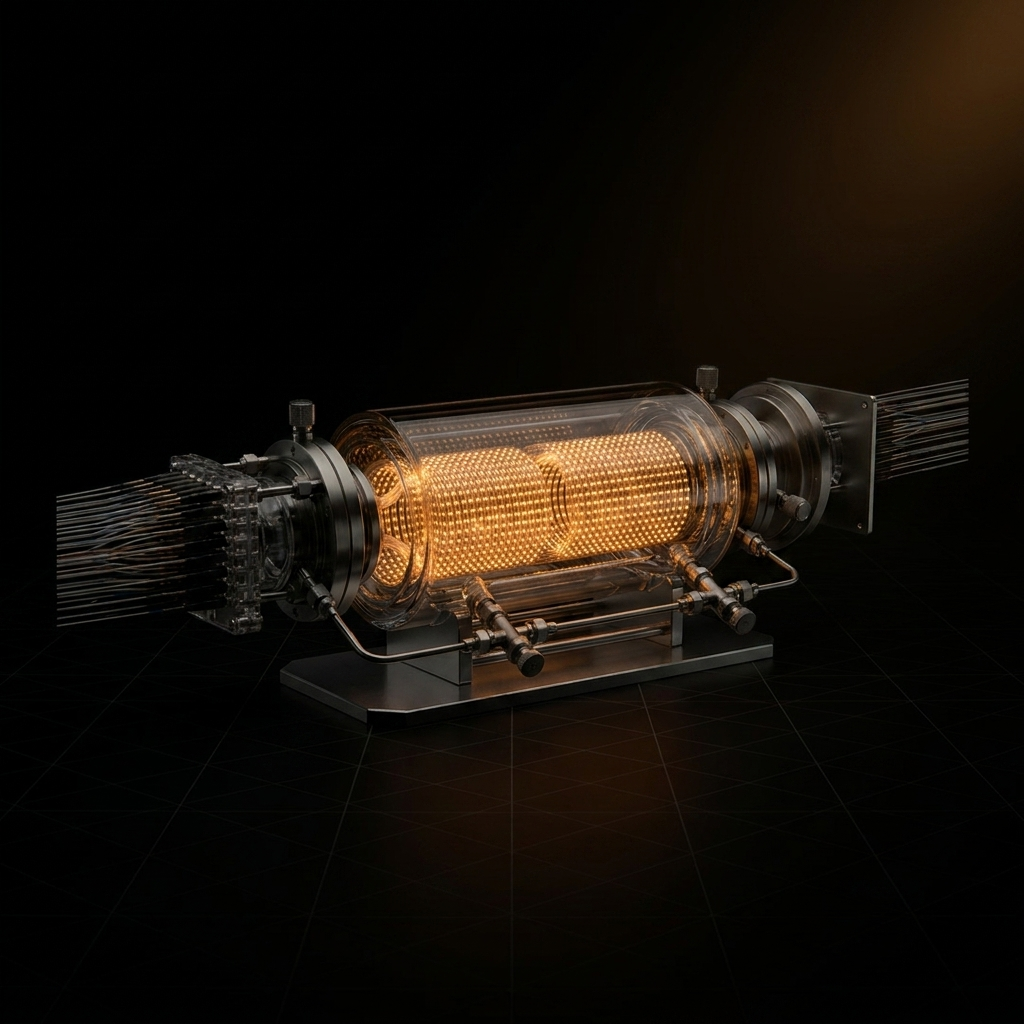
The light enters a coil of single-mode fiber and simply keeps moving, lap after lap, at the speed of light in glass. There is no cell to charge and nothing to refresh. Distance becomes capacity: the longer the loop, the more data it holds. Memory here is a property of motion, not of matter at rest.

03
Fold · encode

Constitutional Compression

Before it circulates, each weight matrix passes through a layered compression stack. A frequency transform exposes its underlying structure; that structure is fitted to a continuous generating function and then folded into a compact ternary network. We do not store the data so much as store the recipe that reproduces it.

04
Regenerate · verify

Ternary Reconstruction

On demand, the generating network regenerates the exact layer that was folded into it, sealed bit-perfect against the original. Reconstruction is lossless by construction — the substrate returns precisely what was committed, on the loop’s next pass, exactly when the model asks for it.

05
Stabilize · preserve

Thermal Coherence

Kilometers of circulating light only remain legible if the glass holds perfectly still. A thermally controlled vessel keeps the fiber in phase, so a signal that began its journey arrives intact however many laps later it is read. Coherence is what turns light in motion into reliable memory.

06
Deploy · transform

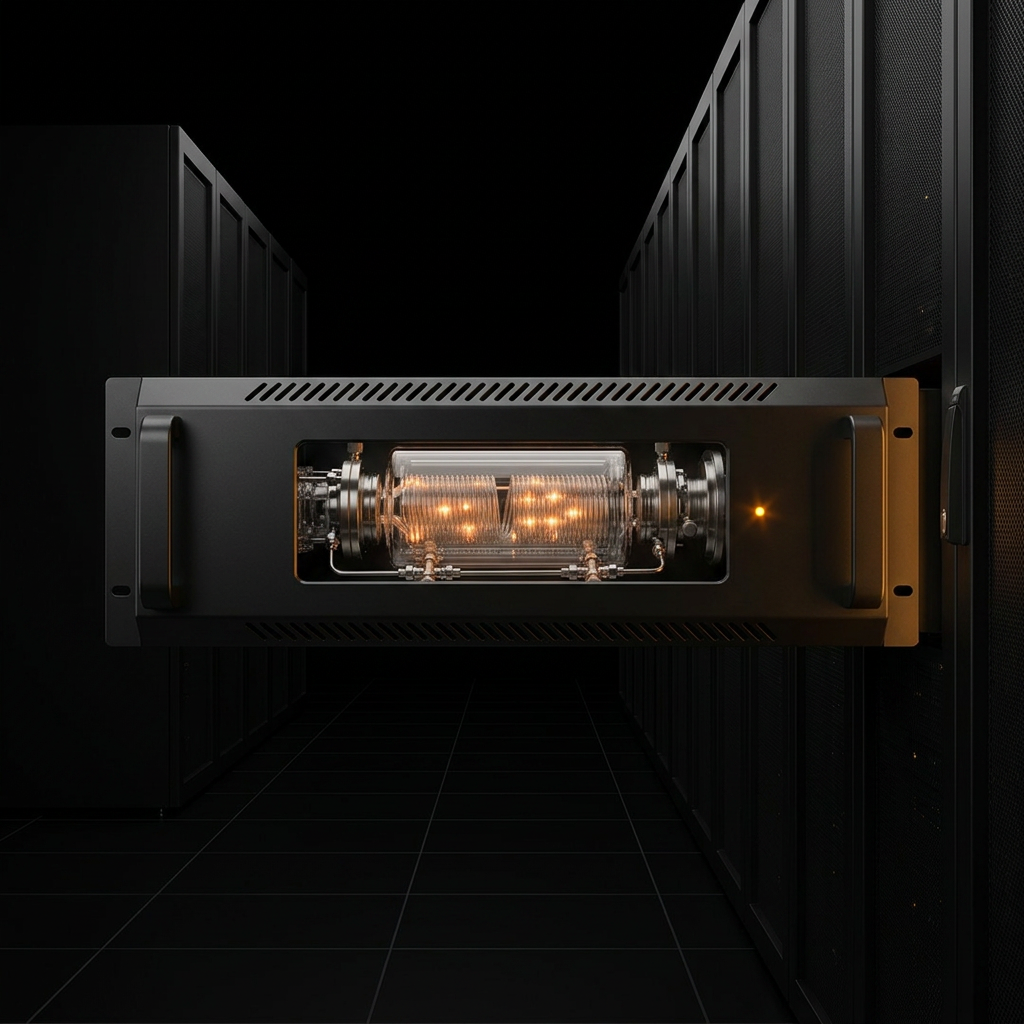
Datacenter Integration

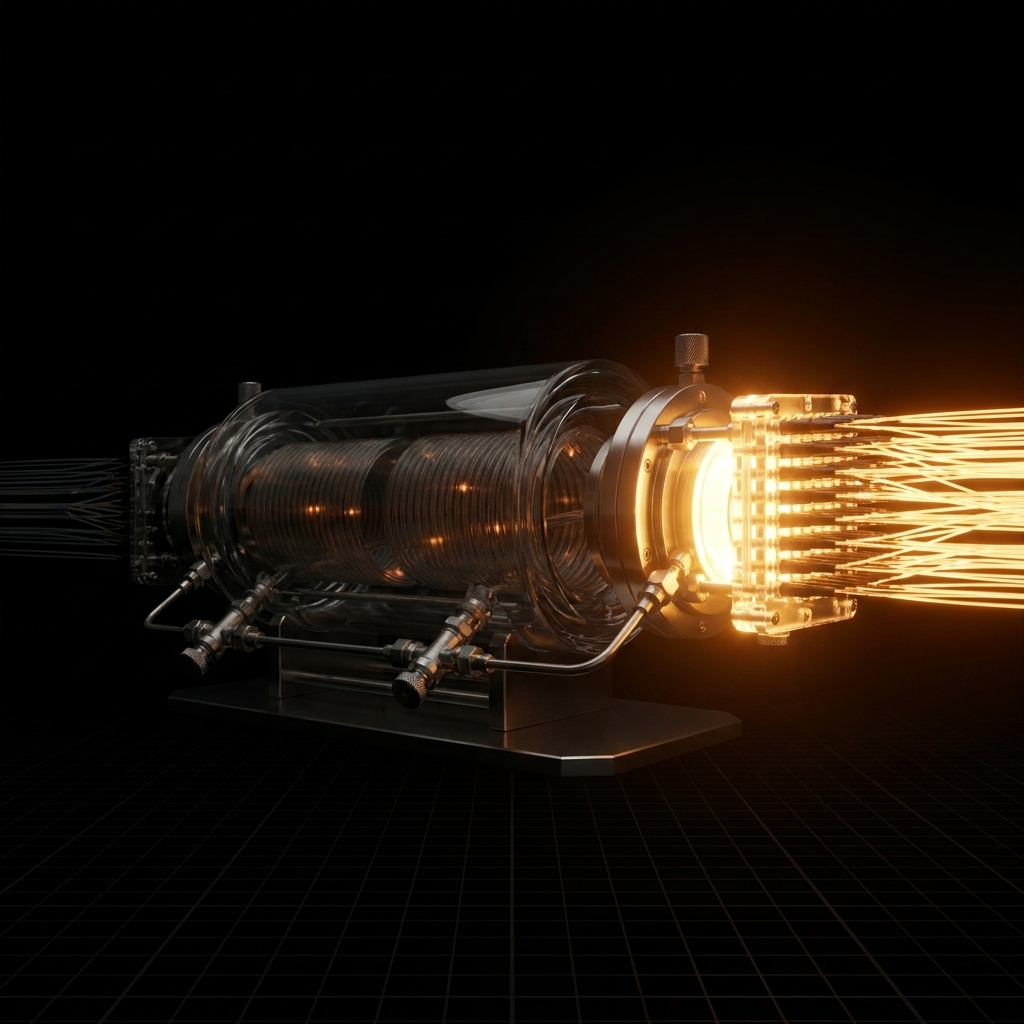
The whole system — vessel, thermal control, and optical switch — lands in a standard rack and speaks to the cluster over a single fiber. A memory-starved deployment becomes a compute-bound one. No new silicon, no fab queue, no architecture rewrite. Glass and light, dropped in beside the GPUs already there.

We don’t optimize within the constraint.
We relocate it.

We don’t just store data. We wake it up.

Six ideas, one settled medium.

K‑RAM is not a new material or a new transistor. It is a set of techniques applied to physics that has been understood for half a century — light, glass, and the mathematics of folding structure into almost nothing.

The Physics Underneath
fold f(x) = ax³ + bx² + cx + d 4 params → ∞
01 / 06
Compress · generate

CubicFolding

A weight matrix is folded into a smooth cubic generating function rather than kept as a dense grid of values. The function is tiny; what it can unfold back into is not. This is how a frontier-scale layer collapses into something a loop of light can carry.

−1 ~25% 0 ~50% +1 ~25% base-3 · maximum information density
02 / 06
Quantize · encode

Ternary Encoding

The generating networks are quantized to three states — {-1, 0, +1}. Base-three is the most information-dense way to encode structure with discrete symbols, and it leaves the regenerating network almost weightless while keeping reconstruction exact.

the rule f(r,c) = g(r−c) Toeplitz structure store the rule · not the numbers
03 / 06
Measure · exploit

Constitutional Sparsity

Frontier model weights are not random — they are constitutionally regular, built from structure that repeats at depth. We measure that regularity and exploit it, storing the rule a layer obeys instead of every number the rule produces.

T coherence degrading −ε phase locked · coherent borosilicate thermal chamber ΔT < 0.01 K · years of continuous operation
04 / 06
Control · preserve

Thermal Stabilization

Light circulating through kilometers of fiber is exquisitely sensitive to the temperature of the glass. Precision thermal control holds the substrate in phase, turning a delicate optical effect into a memory you can trust across years of continuous operation.

λ₁ · single channel Moore's Law never touched this axis
05 / 06
Multiply · scale

Wavelength Multiplexing

A single fiber carries hundreds of independent channels at once, each on its own color of light. Capacity scales by adding wavelengths, not by shrinking features — bandwidth grows along an axis Moore’s Law never touched.

time perf transistor limit Moore's Law c/n = 200,000 km/s moat a constant · not a trade secret
06 / 06
Settle · endure

A Physics Moat

The speed of light in glass is a constant, not a trade secret. You cannot engineer around it, iterate past it, or acquire the company that found it. The substrate is commodity fiber, made the same way since 1970. The advantage is knowing what to do with settled physics.

The Inevitability

Three things become true at once.

When memory is light in glass instead of charge in silicon, the consequences are not incremental. They are structural — and they all arrive together.

01 — Density

Distance is capacity.

Storage scales with the length of the loop, so it grows by adding glass — not by buying the most advanced chips on the market or waiting on a fab. The entire weight set of a frontier model can live permanently in working memory, with nothing to shard and nothing to swap.

02 — Energy

Memory that holds itself.

Light in a waveguide is a near-lossless way to move and keep information. There is no array of cells to power and refresh billions of times a second. The substrate spends energy to stay coherent — not to remember — which is a different and far smaller bill.

03 — Sovereignty

No chokepoint to control.

There is no fab dependency, no export-controlled process, no supply chain routed through three countries. The substrate is commodity optical fiber and the medium is light. Built in Calgary, Alberta, K‑RAM is memory infrastructure a nation can actually own.

Build at the
Speed of Light.

For operators relocating the inference memory wall, and for partners building the substrate underneath the next decade of AI.

Get in Touch →